ALDI and Walmart both sell themselves as the cheap place to buy food, and the choice is easier to make on feel than on arithmetic. One is a small store with almost no brands you recognize. The other is a big-box store where you can buy milk, motor oil and a birthday present without moving the car. The useful question is narrower, and it is the one in the title: is ALDI cheaper than Walmart, on the list you actually buy?
Three independent checks were run this year. In two of them ALDI came out cheaper. In the third it finished behind both Walmart and Kroger. No slogan survives that range. Here is what the 2026 checks found, why the two chains price things differently, and a way to test your own list.
Is ALDI cheaper than Walmart? The short answer
In the three checks below, ALDI comes out cheaper more often than Walmart does, and by less than its loudest fans claim. The two largest 2026 baskets put the gap at 1.74 percent and 9.4 percent. On the $95 basket the first one is $1.66. On the $120 basket the second is $11.38. Both figures are real, and neither is a rule. There is no cheaper store in this pair, only a cheaper list.
These are different baskets in different places, not three runs of the same test, so the percentages are not steps on one scale. What decides them is what you put in the cart. ALDI’s advantage is sharpest on produce and on dry pantry goods, and one 2026 study singled out its store-brand dairy as a strong value. Walmart’s shows up in the brands ALDI does not stock, in meat in the week it was checked, in drinks, where the package sizes differ, and in paper goods. A third check, on 15 store-brand staples, put ALDI third of four chains.
The backdrop matters, because grocery inflation is no longer the story it was. Food bought at home rose 1.8 percent in the 12 months to September 2026. Food eaten out rose 3.5 percent, according to the Bureau of Labor Statistics. The contest between these two chains is now a fight over a couple of percentage points, not over whether groceries hurt.
What my 2017 comparison found, and what still holds
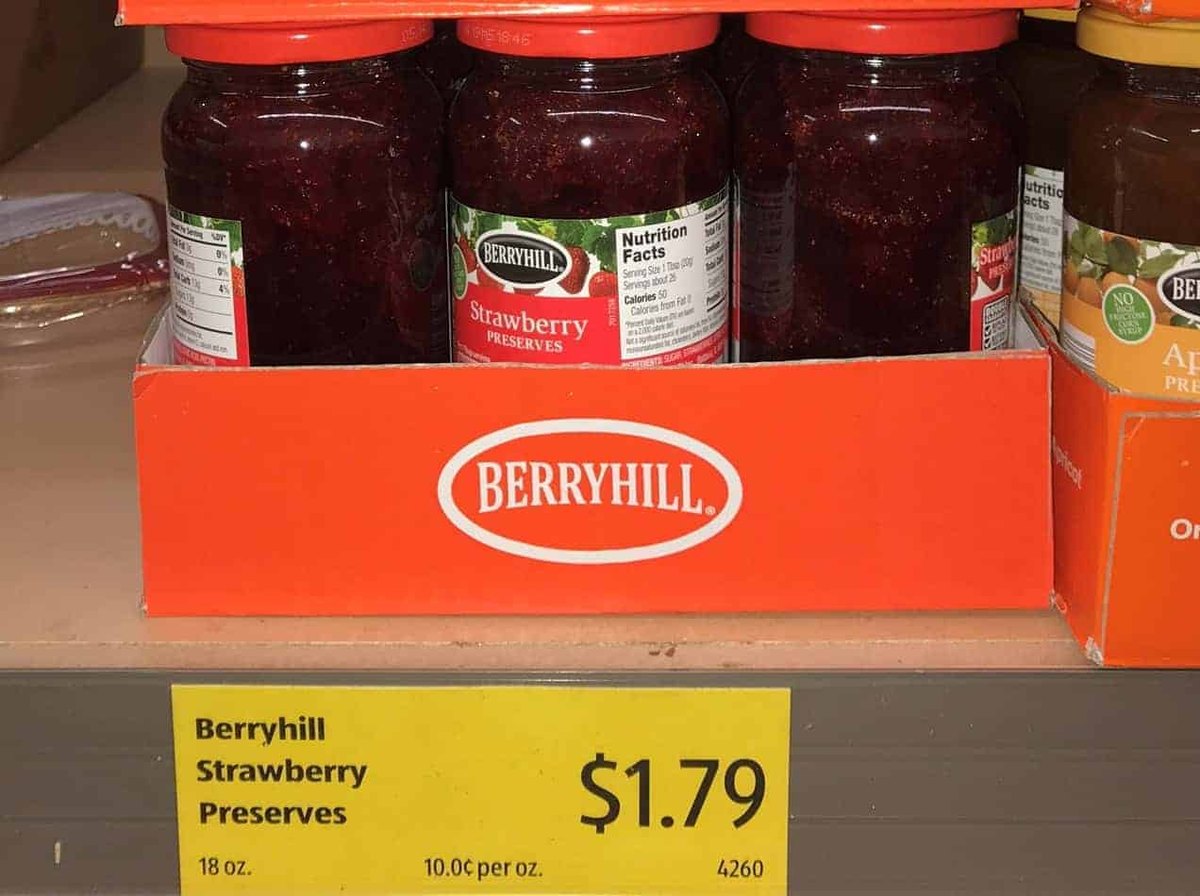
I ran the comparison myself once, in November 2017, at an ALDI in Miami. I photographed the shelf prices and then looked up the same items on Walmart’s grocery site for a store near me. On the Walmart side I used the cheapest comparable brand, and I ignored anything on sale at either store. Walmart came out ahead in seven of ten categories. My note at the time: several of its items came in very large, warehouse-style packages. In ounce-for-ounce terms it still looked cheaper.
Two things about that method matter now. I compared item against item, not basket against basket, and I collected the two sets of prices on different days. It is the same question answered in a different unit, which is why a 2017 answer and a 2026 answer can both be honest and still disagree.
That piece also carried an answer to reader Julie, who wrote on Facebook that a price comparison has to weigh quality too. That answer still stands. I mostly kept the list to single-ingredient items so the quality gap would be small, and I suggested checking an ingredients list before deciding what to buy. ALDI’s own page still describes the same model, mostly its own brands at low prices. In 2017 I called the rest of the assortment most of what a normal supermarket carries, without the fancy end. What did not age well is the reassurance rather than the arithmetic. I half-joked that German ownership said something about quality, which was a stereotype standing in for evidence.
What the 2026 price checks actually found
| Check | When and where | Basket | Walmart | ALDI | Winner |
|---|---|---|---|---|---|
| Talk Business & Politics | March 11, 2026, Bentonville, Arkansas | 30 items, store brands on both sides, sale items and rollbacks included | $95.43 | $93.77 | ALDI, 1.74 percent |
| Tasting Table | April 2026, northeastern Pennsylvania | One two-person household’s weekly list, sale prices included | $121.20 | $109.82 | ALDI, about 9.4 percent |
| Restaurant Furniture Plus study | Reported July 29, 2026; collection date not stated | 15 store-brand staples, timing not stated | $30.95 | $33.15 | Walmart, with Kroger cheapest overall |
The 30-item Arkansas basket
The closest thing to a controlled test this year was run on March 11 at Walmart Store No. 100 in Bentonville, Arkansas, and an ALDI about a mile away. The basket was 30 items a family might take to a lake house for a weekend. It held dairy, produce, meat, bread, soda, snacks, dry goods, paper plates and paper towels. Both carts were built from store brands, with one national label, Duke’s mayonnaise, in each, so the comparison was not a national label against a cheap imitation.
Walmart’s basket came to $95.43 before tax. ALDI’s came to $93.77. That is 1.74 percent, and Walmart had already banked $1.33 in rollbacks inside its total. The category detail is more useful than the total. ALDI won dry groceries by $1.87 and fresh produce by $1.70, though the bananas happened to be on sale that day. Walmart won meat by 55 cents, but only because of a 59-cent rollback on chicken legs. It took beverages by 24 cents, snacks by 4 cents and paper goods by $1.56.
Read that list again and the pattern is plain. ALDI wins where the store controls the product and the package. Walmart wins where the package is bulky, where brands matter, and where a run of rollbacks can move the number.
The two-person Pennsylvania week
The second check was a real weekly shop rather than a weekend bundle. It was published in April for a two-person household in northeastern Pennsylvania. Sale prices were counted on both sides. Walmart’s haul came to $121.20 and ALDI’s to $109.82, a gap of about 9.4 percent.
Produce told the story here: $40.87 at Walmart against $35.17 at ALDI. Meat and other proteins ran $30.32 against $24.42, the largest gap in the list. Walmart took dairy by ten cents and drinks by $1.34.
This is the basket that makes ALDI look like the obvious answer, and it is worth being precise about why. A household that buys a lot of produce and cooks its own protein will feel ALDI’s advantage every week. A household that buys soda by the case and paper goods by the pack will feel Walmart’s.
The 15-item study where ALDI lost
The third check ran the other way. A study reported on July 29, 2026 compared 15 store-brand staples, milk and eggs and bread and chicken breast among them, at Walmart, Kroger, ALDI and Albertsons. The reporting credits Southern Living for the basket and the study to Restaurant Furniture Plus, and it gives no date or place for the collection. Kroger came first at $30.00 and had the cheapest price on 10 of the 15 items. Walmart was second at $30.95. ALDI was third at $33.15, which is about 7 percent above Walmart, and Albertsons was last at $35.58.
The study left out Costco, Trader Joe’s, Piggly Wiggly and H-E-B. The reporting gives reasons for only two of them: Trader Joe’s did not carry some items to compare, and Costco’s bulk sizes made single-item comparison difficult. So the chain that wins on produce and pantry goods lost on a short list of store-brand staples, in a study that priced one small basket, once.
Why ALDI can be cheaper at all
The store model
ALDI’s own account of the model is two things. First, more than 90 percent of its products are ALDI-exclusive brands. Second, the stores are small. The rest is inference rather than the company’s account: fewer brands keep a national marketing budget out of the price, a small building needs less shelving and fewer staff hours, and there is less stock to spoil.
Its habits follow from that logic. You rent a cart with a quarter and get it back when you chain it to the rack. You bring your own bags and pack them yourself, and if you forget, the bags at the register run $0.55, $0.95 and $1.05 on the company’s own listing. In exchange, the own-brand products come with a guarantee. If you do not like an ALDI-exclusive item, the company says it will refund the money and replace the product.
How big ALDI has become
ALDI says it will open more than 180 stores in 2026, its 50th year in the United States. It expects to end the year with nearly 2,800 stores, toward a goal of 3,200 by 2028. The company also says 17 million new customers shopped its stores in 2025. It says one in three US households shopped there in the past year, by its own proprietary data. Treat the marketing with the usual discount and the direction is still clear: this is no longer a niche chain.
Which is why the company’s own savings estimate deserves a label. ALDI says a family of four can save nearly $4,000 a year shopping there, a number drawn from its own price leadership report. That works out to about $77 a week. It is a claim by a party with an interest in the answer, and the two independent baskets above put the real gap at $1.66 and $11.38.
Where Walmart wins
Walmart’s counterargument is not price. It is that you can get everything in one trip, including the branded things ALDI does not stock. Its rollbacks are also large enough to blunt a small percentage gap. The company ran about 6,200 price rollbacks in the quarter ending February 1, 2026, up 23 percent from a year earlier. It said most were in grocery and food.
The basket data backs the breadth claim. In the Arkansas check, Walmart took meat, beverages, snacks and paper goods. In the Pennsylvania check it took dairy and drinks. Both results point the same way: the categories Walmart won are the bulky, branded, multi-pack ones.
There is also the matter of what ALDI simply does not carry. A short assortment is the reason for the low prices, and it is also the reason a normal week’s list can turn into two stops. Some lists need a specific brand of cereal, a particular hot sauce or a pharmacy item. Then the second stop is not optional, and the second stop has a cost.
The costs that never make it onto the shelf tag
A percentage gap is only part of what a trip costs. Bags are the clearest example, because ALDI asks you to bring your own and sells replacements at the register. ALDI’s own listing puts the medium bag at $0.95. Someone who bought one every week for a year would pay $49.40, which is more than half of the $86 that a $1.66 gap is worth over 52 shops. Both are arithmetic on an assumption, not a finding. Remember the bags once and that line disappears.
The cart quarter is not a cost, since it comes back when you chain the cart. It is a habit, one the company designs into the trip. The store also runs limited-time finds and weekly price drops, which is a reason to read the ad before you go rather than at the door. What none of the three checks priced is the drive. No study paid for fuel or counted the minutes, so a $1.66 gap does not settle whether a second stop is worth your afternoon.
Package size is the quiet one, and it is where my 2017 list and the 2026 baskets measured different things. Big-box multi-packs can make Walmart’s unit price look unbeatable while leaving you with more soda than you will drink. A smaller ALDI package can cost less at the register and more per ounce. All three 2026 checks priced packages, not ounces. My 2017 list measured the opposite way, item by item and ounce by ounce. That is why the tool below asks for the price of the same package at both stores.
Test your own list against theirs
Every one of these studies has the same weakness: it is somebody else’s list. The three checks disagree by more than 16 percentage points. ALDI is 9.4 percent cheaper in one and 7 percent dearer in another. The reason is that baskets differ. So the only number that settles the question for your household is your own, and it takes one trip to each store.
Pick five things you buy every week. Write down the price of the identical package at both stores, not the price per shelf and not the price after a coupon you might not have. Put them in the box below. It will tell you which store wins your basket, by how much, and what that gap is worth over the number of trips you enter. It will not tell you where to shop, because that depends on the drive, the list and what you would rather not spend a Saturday doing.
Basket check: run your own five-item test
Type the price of the same package at both stores and see which basket wins. Tap or click to open.
Both prices must be for the same size package: the same 18 oz jar against the same 18 oz jar, not a 12 oz jar against a 24 oz one. This tool does arithmetic on the numbers you type. It knows nothing about prices in your store today.
| Item | ALDI price | Walmart price |
|---|---|---|

What the two stores ask you to do differently
What differs is the work each store hands you. ALDI rents you a cart for a quarter and asks you to bring bags and pack them at a counter. A specific brand may simply not be there, which is the trade for the small store. Walmart offers a bigger store and a much wider assortment. Its rollbacks run to thousands of items a quarter.
That is the whole trade. At ALDI part of the saving is your labour: you carry, you bag, you walk the cart back. At Walmart part of the saving is somebody else's timing, because the rollbacks rotate and the same item is cheap one week and ordinary the next. If the two stores are close together, splitting the list is not cheating, because each chain wins a different half of the basket.
Frequently asked questions
Is ALDI cheaper than Walmart?
In the three 2026 checks, ALDI came out cheaper twice, by 1.74 percent and about 9.4 percent. A third, on 15 store-brand staples, put ALDI third behind Kroger and Walmart.
How much cheaper is ALDI than Walmart?
On published 2026 baskets the gap runs from $1.66 on a $95 basket to $11.38 on a $120 one. That is roughly 1.7 percent to 9.4 percent, and the size of your own list decides which end you land on.
Why is ALDI cheaper than Walmart?
ALDI says more than 90 percent of its products are its own brands, and it sells them in small stores with a bring-your-own-bag checkout. That is the company's own explanation for its prices.
Do you need a quarter for an ALDI cart?
Yes. You put a quarter in the lock to release a cart and get it back when you chain the cart to the rack.
Does ALDI charge for bags?
You bag your own groceries, and bags are sold at the register if you forget. On the company's own listing they run $0.55, $0.95 and $1.05. Bringing your own costs nothing.
A short video on how the discount model works
The Wall Street Journal's six-minute explainer is the clearest account of why a store with so little on its shelves can undercut the big-box store next door, from the private-label strategy to the layout. It makes the trade-offs visible in a way a price tag cannot.
What the numbers add up to
ALDI wins two of the three 2026 baskets and loses the right to brag about it. The chain is cheaper on produce and pantry staples. It is not cheaper by enough to justify a long drive or a second stop. Walmart wins on breadth, on brands, and on the weeks when its rollbacks are pointed at what you need.
My own conclusion has only partly held since 2017. One trip still beats two, and I would rather not go hunting for the thing the short aisle does not carry. On price, the 2017 answer did not hold, and the 2026 baskets say so in dollars. What survives is narrower than a slogan: know your list, and check it against the shelf.
For the other end of the same question, two of our guides work on a bigger list: one on building a weekly grocery budget, and one on who brings what to a potluck. If you are feeding a crowd, our turkey-per-person guide starts where this page stops: with a number you can check.
This article is for general information and entertainment, not financial advice.
Sources
All sources below were read in November 2026. The published percentages and totals are the sources'. The $1.66 and $11.38 gaps, the 7 percent, the 16-point span, the weekly and annual figures and the comparison between studies are my arithmetic on those totals.
- Talk Business & Politics, "The Supply Side: Aldi food, pantry prices competitive with Walmart," March 27, 2026.
- Tasting Table, "I Priced Out A Week's Groceries At Aldi And Walmart," April 26, 2026.
- MLive, carried by Yahoo Life, "Aldi fans, take note: it didn't win the grocery price war this time," July 29, 2026, reporting a Restaurant Furniture Plus study as relayed by Southern Living, with no collection date given.
- ALDI US, "ALDI US Doubles Down on Growth in 2026," January 12, 2026.
- ALDI US, "ALDI Gives Fans What They Want with Its Largest Packaging Refresh Yet," September 24, 2025.
- ALDI US, "About ALDI."
- US Bureau of Labor Statistics, "Consumer Price Index Summary, September 2026," released October 14, 2026.
Updated November 2026 by Richie with the help of modern digital tools.


Dude. I just can’t abide Aldi. The one time I went in there I was greeted by a horde of shoppers and line that was taking 30 minutes to check out. If time is money, I’m going to Walmart! 🙂
Hopefully your Aldi is cleaner and quicker than ours!
Yeah, the first time we went it was a madhouse, but the prices were just seductive compared to some of my nearby supermarkets. From that experience, we now try to go at off-peak times.
I dunno, I think ALDI has pros and cons (like everything). For a big shopping trip, I prefer Walmart. But for a mid-size stock-up, I like ALDI because it’s cheap and because the limited choices make it efficient (since they usually just have one brand of everything, there’s no need to compare).