An empty window makes a room feel unfinished, and a landlord’s lease rarely lets you drill. The IKEA SCHOTTIS is the cheapest serious answer for a bare window: a pleated polyester shade that sticks to the window frame with tape and costs $4.99. I bought my first batch years ago, while my wife Lily and I were finishing a renovation of our house.
The short answer, before the details: this is a very good shade for a window nobody touches much, and a disappointing one for a window you open every day. It is not blackout, it is not pretty from a foot away, and the little clips go missing. For a rental, a guest room, a basement, or the last window in a renovation you have already paid for, it does the job for the price of a coffee.
What follows is what the shade is today, what three years of use in our house showed, how to measure and cut it once, and what the next fifteen dollars buys if this one is not enough.
| At a glance | Detail |
|---|---|
| Product | IKEA SCHOTTIS pleated shade, white, 35 ½ x 74 ¾ inches |
| Price | $4.99 (read at IKEA on November 1, 2026) |
| Light control | Light filtering, not blackout. Silhouettes can be seen from outside at night when the room is lit. |
| Install | Adhesive tape on a smooth frame, no drilling, cut to width with scissors |
| Best for | Rentals, guest rooms, basements, dorms, staging, windows that stay put |
| Skip it if | You need darkness, you open the window daily, or the window is on show |
What $4.99 actually buys
The SCHOTTIS is a single pleated sheet of 100% recycled polyester with a polypropylene plastic part, and that is the whole object. It arrives folded into a slim package 35 ½ inches long, 1 ¾ inches wide, and ¾ inch deep, and it opens into a concertina that you stretch down over the glass. There is no headrail, no cord, no mechanism, and no bracket. The top edge carries adhesive tape. The bottom edge carries one half of a hook-and-loop strip, and the frame gets the other half so the shade can be fastened shut.
Two plastic clips hold the shade open at whatever height you choose. That is the operating system: you push the shade up, put a clip on each side, and the pleats stay put. To close it, you peel the bottom free and let the pleats drop, then press the hook-and-loop strip shut. It takes a few seconds more than a roller blind and it never feels mechanical.
The white version filters light rather than blocking it. IKEA says the fabric dims daylight, reduces glare, and gives a comfortable sense of privacy because people cannot see in. At night, when the room is lit, silhouettes can be perceived from outside. The shade is also sold in one size, 35 ½ inches wide by 74 ¾ inches long. Longer windows will be left bare at the bottom, which is the single biggest limitation of the design.
Care is a dust cloth or a vacuum with the soft brush attachment. The fabric is not washable, and IKEA says not to bleach, tumble dry, or iron it. The last instruction matters more than it looks: a hot iron will flatten the pleats the shade depends on.
What three years in one house showed
We bought ours at $2.99, and the price has since moved to $3.99 and now $4.99. We were finishing a renovation with no curtains and no budget left, so the appeal was simple: each shade cost $2.99, and nothing had to be drilled into new trim.
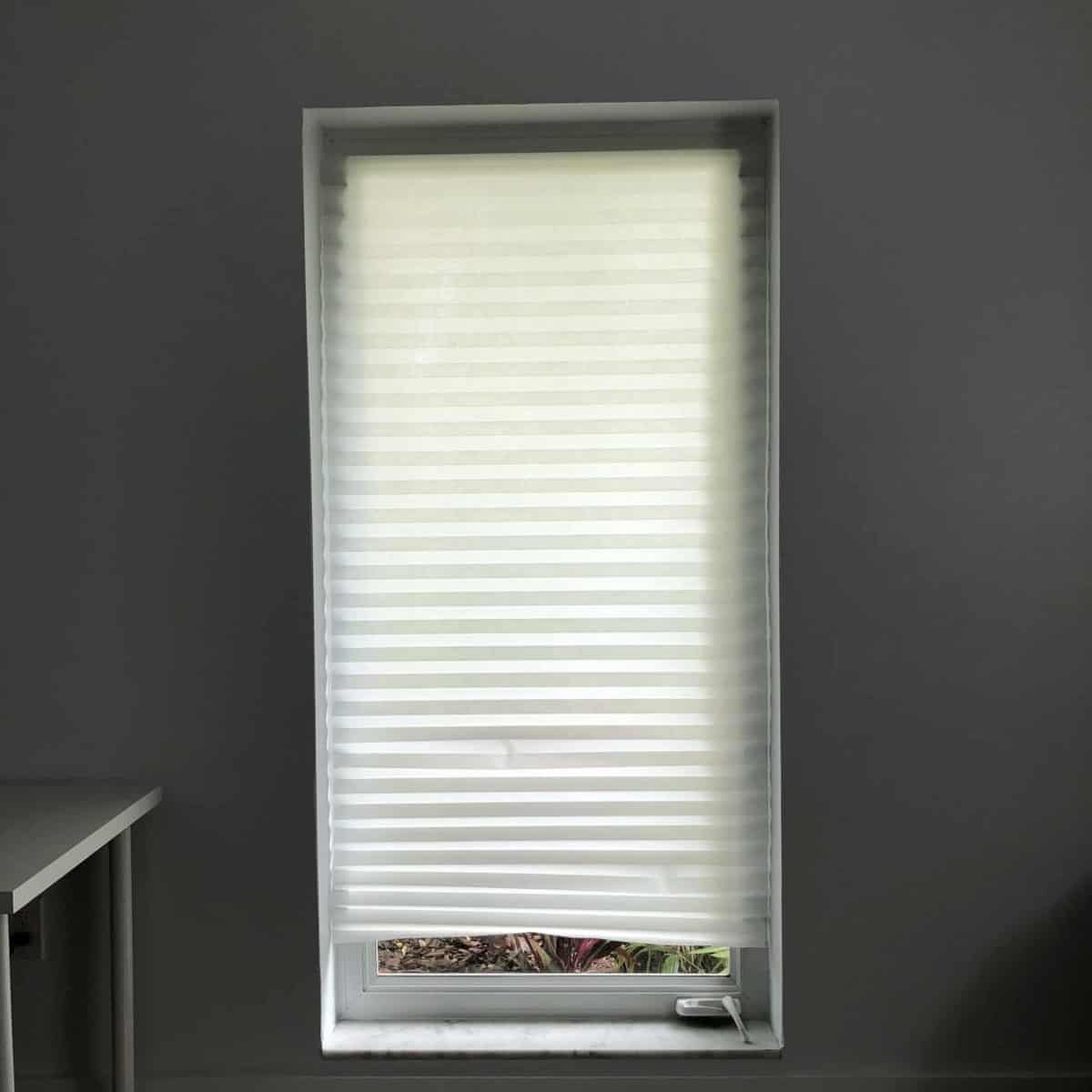
Three years in, the split was clear. The shades in the guest room, which were almost never touched, looked and felt like new. The one in the home office, which was opened and closed nearly every day, had lost some stiffness in the pleats after about nine months, and the edges had begun to fray where the clips grip. That is the whole wear story: this shade does not fail on the calendar, it fails on use.
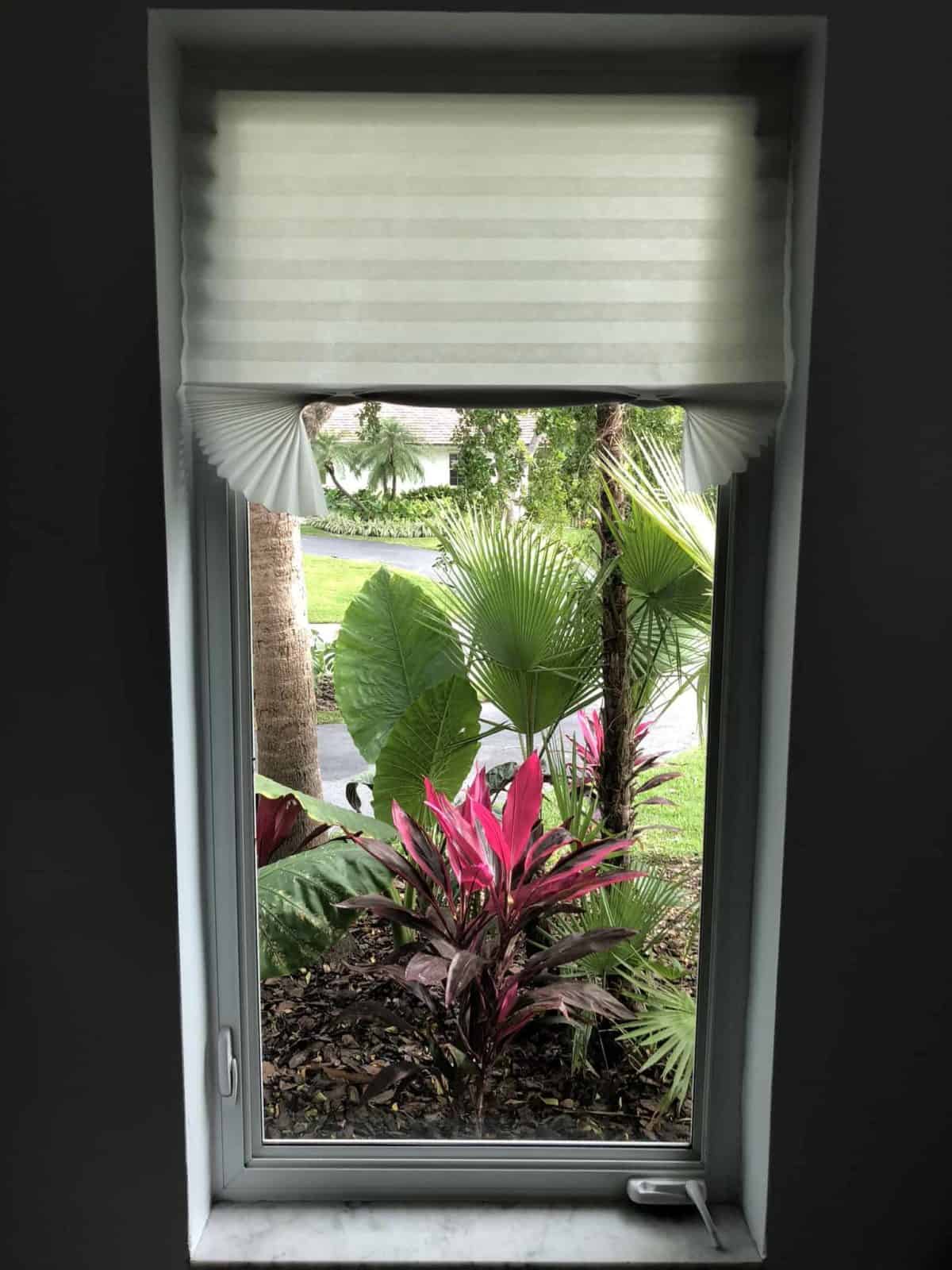
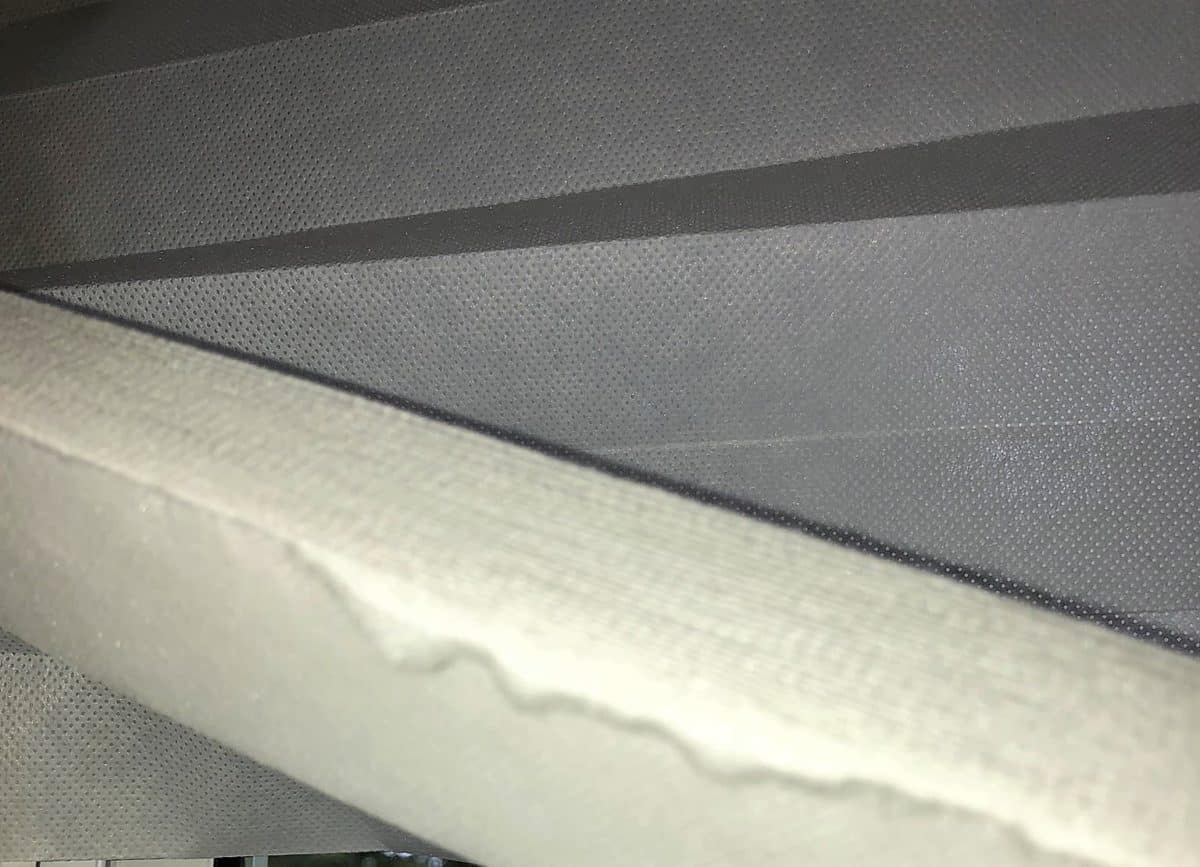
Two smaller annoyances showed up along the way. The clips are small, loose, and easy to misplace, and losing one turns a two-clip shade into a one-clip shade that sags on one side. And up close, the material looks like what it is: a thin folded polymer sheet. From across a room it reads as a plain white blind. From a foot away, it reads as a $4.99 solution, which is fine in a spare bedroom and less fine in a living room you actually decorate.
Where it works, and where it looks cheap
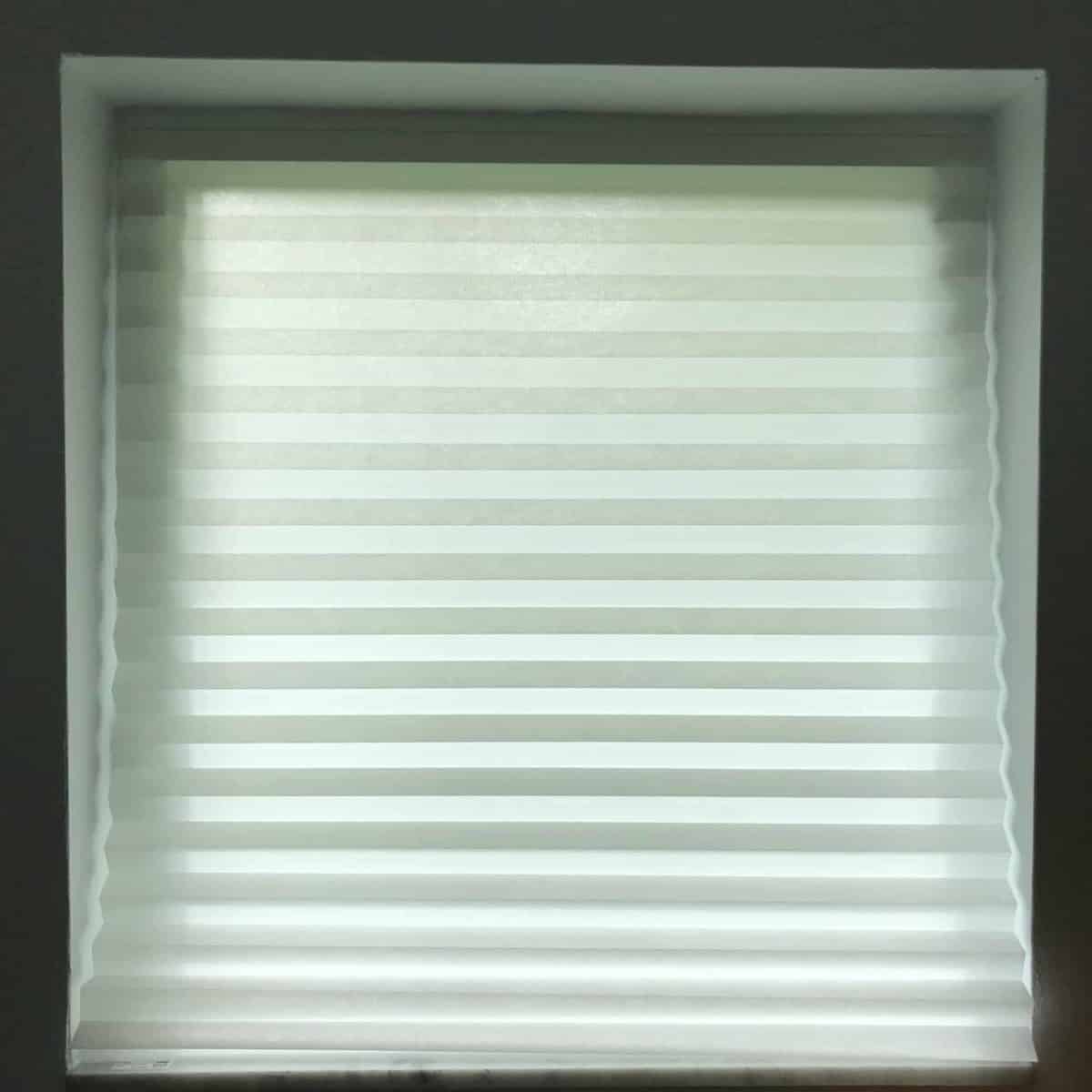
It works in rooms with low expectations and low traffic: a guest room, a basement window, a dorm, a first apartment, a house being staged for sale, a laundry room, or the back of a garage. It works especially well in a rental, because nothing in it is screwed into the frame, and it works behind a curtain, where nobody inspects the frame.
It disappoints in four situations. A window you open every day will wear the pleats and the clip edges, as ours did. A bedroom that needs darkness will not get it, because the white fabric filters light and the sides are not sealed. A tall window will show bare glass below the 74 ¾ inch drop. And a window on show in a main room will look improvised, because it is.
The blackout version costs one dollar more
IKEA also sells a SCHOTTIS blackout pleated blind in dark gray, 39 ¼ inches wide by 74 ¾ inches long, for $5.99. It uses the same tape-and-clip design, its material list adds PET plastic, and it blocks light rather than filtering it. The width is nearly four inches greater, which matters if your window falls between the two sizes.
The trade is that you get darkness in exchange for a darker color in the room. A white filter disappears into a bright wall; a dark gray blockout panel is a visible object. If the job is a bedroom and the goal is sleep, the extra dollar is easy arithmetic. If the job is a hallway window you want to look neutral, the white version is the better match.
How to measure, cut and hang it once
Measuring the glass instead of the frame is the mistake that ruins a cut, and measuring once in the middle of the window is the second one. The measuring method that blinds sellers use is worth copying, because it costs a minute and saves a return trip. Measure the width inside the frame at the top, the middle, and the bottom, and use the smallest of the three. Measure the height on the left, middle, and right, and write those down too. Lowe’s guide says to work to the nearest eighth of an inch, and to decide first whether you are mounting inside the frame or over it, because the two ask for different numbers.
Will it fit your window?
Enter your measurements and see how many shades you need and how much to trim. Tap or click to open.
The tool assumes the untrimmed product widths of 35.5 inches for the white shade and 39.25 inches for the blackout, and the 74.75 inch drop IKEA states. One buyer measured the panel she received at about 65 to 66 inches fully stretched, so measure the panel itself before you plan on the full length. Measure the frame three times as described above before you cut anything.
Cutting is the easy part. Mark the width you need, add the tiny allowance you prefer for clearance at the frame, and cut with sharp household scissors along a straight edge. Because the shade is a pleated sheet, a wobbly cut shows at the edges; take the extra thirty seconds. Then peel the backing from the top tape, press the shade along the top of the frame, and smooth it down. Finally, stick the hook-and-loop half to the bottom of the frame so the shade can be fastened closed.
Two things about the tape. IKEA’s own wording is that the blind sticks best on smooth surfaces, so a clean, dry, flat frame is the one to aim for, and a rough brick or textured plaster surround is the wrong place to expect it to hold. And press the full length of the tape rather than the middle.
The video below shows the whole install on a real window, including where the clips go. It runs under five minutes and is worth watching before you cut anything.
What the next fifteen dollars buys
The cheapest shade is not always the cheapest answer, because a shade that annoys you gets replaced. IKEA’s own shelf shows what the money buys as you move up, and the differences are worth knowing before you commit to four windows.
| Model | Price read Nov 1, 2026 | What changes |
|---|---|---|
| SCHOTTIS white, 35 ½ x 74 ¾ in | $4.99 | Tape mount, two clips, light filtering |
| SCHOTTIS blackout, 39 ¼ x 74 ¾ in | $5.99 | Adds a block-out layer, dark gray only |
| FÖNSTERBLAD blackout roller, 23 x 61 in | $19.99 | A real roller mechanism in a narrow width |
| FÖNSTERBLAD blackout roller, 34 x 61 in | $29.99 | Same mechanism, wider |
| HOPPVALS cellular, 23 x 64 in | $29.99 | Cellular construction, cordless, insulated air pocket |
| HOPPVALS cellular, 34 x 64 in | $39.99 | Wider cellular panel |
| FRIDANS blackout roller, 34 x 76 ¾ in | $39.99 | Full-length roller with a cordless mechanism |
| HORNVALLMO blackout pleated, 34 x 51 ¼ in | $39.99 | Top-down, bottom-up pleated blind, marked last chance |
| TRIPPEVALS blackout cellular, 34 x 76 ¾ in | $69.99 | Full-length blackout cellular, the top of this range |
Read the table as a ladder of problems solved. At $4.99 you solve privacy and glare on a window that stays put. At roughly $20 to $40 you buy a mechanism, which means the shade opens and closes like a blind instead of being clipped. From about $40 upward you also buy length, insulation, or top-down light control. Nothing in the ladder changes the fact that the SCHOTTIS is the only one here under $10 that goes up without a drill.
If the rest of the room is still coming together, the lesson from a bigger renovation holds here too: a window you open daily is where a $40 roller earns its price, and a window you open twice a year is not.
What buyers complain about
The product page carries a 4.2 average across 4,678 reviews, which is a good score for a disposable object. The complaints are consistent, and the clip problem is the one we saw at home. The clips are a common target: buyers describe them as flimsy, easy to knock off, and prone to flying across the room while you are trying to hold a shade up. One reviewer gave up and used hair clips instead.
The second cluster is the hook-and-loop strip. It holds very well, which is the problem: more than one buyer reports tearing the fabric while pulling the shade free, because the strip grips harder than the pleated sheet can take. Pull on the strip, not the fabric, and open the shade slowly along its length rather than from one corner.
The third is the tape. It is strong on smooth surfaces and indifferent on rough ones, and one reviewer suggests pressing a strip of painter’s tape onto the frame first so the adhesive comes off cleanly at moving time. That is a reasonable precaution for a rental. Finally, one reviewer measured the blackout at closer to 65 inches of usable drop than the stated 74 ¾, so measure the actual panel before you plan around its length.
The verdict
At $4.99 the SCHOTTIS is the right buy for one specific job: covering a window that nobody opens, in a room that nobody inspects, without drilling a single hole. Two of them cover a 60 inch window for $9.98, and neither needs a screwdriver. Renters get the most out of it, and so does the spare room nobody opens.
It is a permanent solution for a window nobody opens and a temporary fix everywhere else, and pretending otherwise is how people end up disappointed. If the window is on show, if you open it daily, if you need darkness, or if the frame is rough, a roller or a cellular shade is the better fit. The honest summary after three years is the one I would give a friend: it earns its keep on the windows you ignore, and it will not survive the ones you use.
Frequently asked questions
Is the IKEA SCHOTTIS blackout?
The white version is light filtering, not blackout. IKEA sells a separate SCHOTTIS blackout pleated blind in dark gray, 39 ¼ by 74 ¾ inches, for $5.99, which blocks light.
Does the SCHOTTIS need drilling?
No. It attaches with adhesive tape along the top of the window frame and a hook-and-loop strip at the bottom, so no drill and no screws are needed. The tape holds best on smooth, clean, dry surfaces.
Can you cut the SCHOTTIS to fit?
Yes. IKEA sells one width per color, and the fabric is designed to be cut to size. Measure the frame at the top, middle, and bottom, use the smallest width, and cut along a straight edge with sharp scissors.
How many shades do you need for a wide window?
Divide the window width by 35.5 inches for the white shade or 39.25 inches for the blackout, then round up. A 60 inch window takes two white shades, each trimmed to about 30 inches, and the two meet in the middle with a visible join.
How do you keep the SCHOTTIS open?
Two plastic clips are included. You push the pleats up to the height you want and put a clip on each side. The clips are small and easy to lose, which is a common complaint in the product reviews.
Will it cover a tall window?
The drop is 74 ¾ inches, so taller windows will be left bare at the bottom. For a full-height window, a roller or cellular shade in a longer size does the job the SCHOTTIS cannot.
Sources
- IKEA: SCHOTTIS pleated shade, white, 35 ½ x 74 ¾ inches, product page with price, materials, care and review count
- IKEA: SCHOTTIS blackout pleated blind, dark gray, 39 ¼ x 74 ¾ inches, product page
- Lowe’s: How to Measure and Install Blinds, updated October 27, 2026, for the three-point measuring method
- IKEA: SCHOTTIS assembly instructions, 904.313.78
The shades-needed figure in the tool is arithmetic on IKEA’s stated widths, not a manufacturer figure. The two SCHOTTIS lines were read from their product pages, and the related-product prices came from the related-items list on those same pages.
This article is for general information and entertainment, not financial advice.
Updated November 2026 by Richie with the help of modern digital tools.


I’m trying x four to cover French windows for one night when my daughter has a sleepover. I think they’ll work having read this.
Hi Sarah,
I think they probably would work.
Glad to be of help 🙂
Cheers,
Miguel
I will love Schottis now. It can cover most single windows we have in our home. Thanks for sharing.
You’re welcome! We’ve found they stand the test of time, after over 3 years.