The seat map asks for money before it tells you anything. United’s Economy Plus row starts at $29 and Southwest’s new bundles run to $91, and both prices are for extra legroom seats whose fee prompts rarely name the inches or the seat’s position.
In 2017 I wrote that the fee was worth it in most cases, for flights longer than an hour and a half, and that judgment came from paying it on American.
The prompt arrives at booking, when the aircraft is a type rather than a seat, and it wants a yes or a no. Everything that would make the answer obvious, the pitch, the width, the recline, the boarding group, lives somewhere else.
So this page puts those pieces in one place. You get the published 2026 price bands, what each product actually adds, the study numbers on pitch, and the way to check a specific seat now that the go-to seat map tool, SeatGuru, has closed. The calculator at the end turns any fee into a cost per hour in the air, which is the comparison the booking screen never offers.
In this article
What the fee buys, carrier by carrier
Six of the biggest US carriers sell a seat with more room in front of it, and each one names the product differently. The names matter when you are comparing a fare you found on one site with a fee prompt you meet on another.
The published bands for 2026
| Carrier | Product | What the fee adds | What you pay, and on which fare |
|---|---|---|---|
| American | Main Cabin Extra | Extra pitch, earlier boarding | No published band; paid, priced by route |
| Delta | Comfort | Extra pitch, earlier boarding | No published band; paid on Main Cabin fares, priced by route |
| United | Economy Plus | Extra pitch only | From $29 |
| JetBlue | EvenMore | Extra pitch, included perks | Paid; on Main Base there is no advance pick, and a seat is added for a fee |
| Alaska | Premium Class | Extra pitch, earlier boarding | Paid; on Saver a seat is assigned at check-in and paid to pick |
| Southwest | Extra Legroom, sold as Choice Extra | Up to five more inches of pitch | Buy-up about $38 to $91 |
Read the last column as a starting point rather than a price list. Seat pricing moves with the route, the demand on that date, and how full the cabin already is, which is why the same product can cost $29 on one Tuesday and several times that on a holiday Friday. The published floors are still useful, because they tell you the shape of the market. A preferred seat costs a little. An extra-legroom seat costs more. A row near the front of a long flight can cost a lot.
What the table cannot show
Equipment swaps happen after purchase, and a seat map for a 737 does not describe the 737 that shows up. That is a reason to check again close to the flight, not a reason to skip the fee entirely.
A preferred seat is not an extra legroom seat
Two different products share one booking screen, and the cheaper one is usually the one the prompt shows first. A preferred seat is a standard seat in a better place, closer to the front or on the aisle. The pitch is the same as the seat you would get for free. You are paying for the map, not the space.
An extra-legroom seat changes the seat itself. United’s preferred seat starts at $24 on a standard fare, or $36 on a basic one, while Economy Plus starts at $29. That $5 gap is the whole argument for reading the label twice. The cheap upgrade buys a location. The next one up buys inches.
A seat nearer the front still gets you off sooner than one at the back, which is one honest argument for the cheaper preferred fee. An exit row buys space, not an earlier exit.
What an extra few inches means
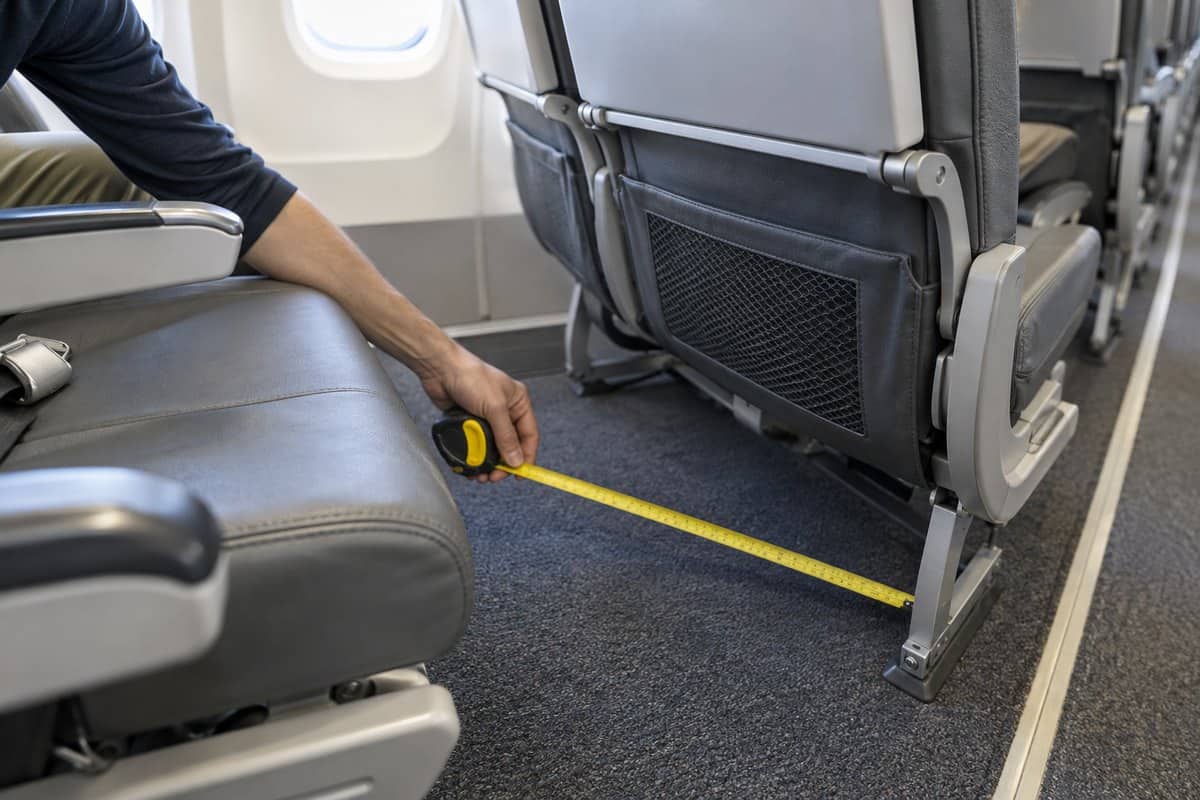
Pitch is the distance from one point on a seat to the same point on the seat in front of it, so it measures the room your knees get, not the width of the cushion. Airlines rarely print it next to the fee. When they do, the figure is worth more than the product name.
Southwest is unusually specific about its new seat. The extra-legroom version adds up to five additional inches of pitch over its standard and preferred seats, the full five inches are on the 737-700, and the airline says pitch varies by aircraft type. That last clause is the honest part of the sentence, and it applies to every carrier.
For a fleet-wide picture, Upgraded Points measured average economy pitch on the ten busiest US domestic routes, using flight listings from November 2023, and published the averages. JetBlue led at 32.3 inches. Southwest followed at 31.8, Delta and Alaska tied at 31.0, Hawaiian sat at 29.0, and Spirit and Frontier tied at 28.0. Those are averages across each airline’s aircraft, not a promise about the seat in your row.
The spread between the best and the worst is 4.3 inches, which is roughly the difference between sitting with your knees clear of the seatback and sitting with them against it. That is what the fee is buying, and it is why “extra legroom” without a number is not a specification.
What extra legroom seats cost in 2026
The published floors for 2026 are easy to state. American charges Basic Economy passengers from about $10 each way to choose a seat. United charges from $15 a flight for a basic-economy seat, $24 for a preferred one, and from $29 for Economy Plus. Southwest’s buy-ups run about $23 to $41 for a preferred seat and about $38 to $91 for extra legroom.
Above those floors, the number is set per flight. A standard seat on a full-service carrier runs from free to the low tens of dollars, and extra-legroom rows can reach into the hundreds on long, in-demand flights. The variation is not a glitch. It is the pricing model, and it is why two readers comparing notes on the same route can both be right.
The size of the business explains the attention it gets. American, Delta, United, Frontier and Spirit together collected $12.4 billion in seating fees between 2018 and 2023, according to a Senate Permanent Subcommittee on Investigations report covered by CNBC in November 2024. Seat selection is no longer a courtesy attached to a ticket. It is a line of revenue with its own pricing.
What that means at the booking screen is simple to describe and hard to like: the fare you compared is not the price you will pay if you want to sit in a particular place, and the gap depends on the day.
The exit row that made a flight worse
I have paid for extra legroom mostly on American, and in 2017 the seats usually ran about $30 to $65 per person, per flight. The legroom itself was reasonable, and the flights were comfortable enough that I kept doing it.
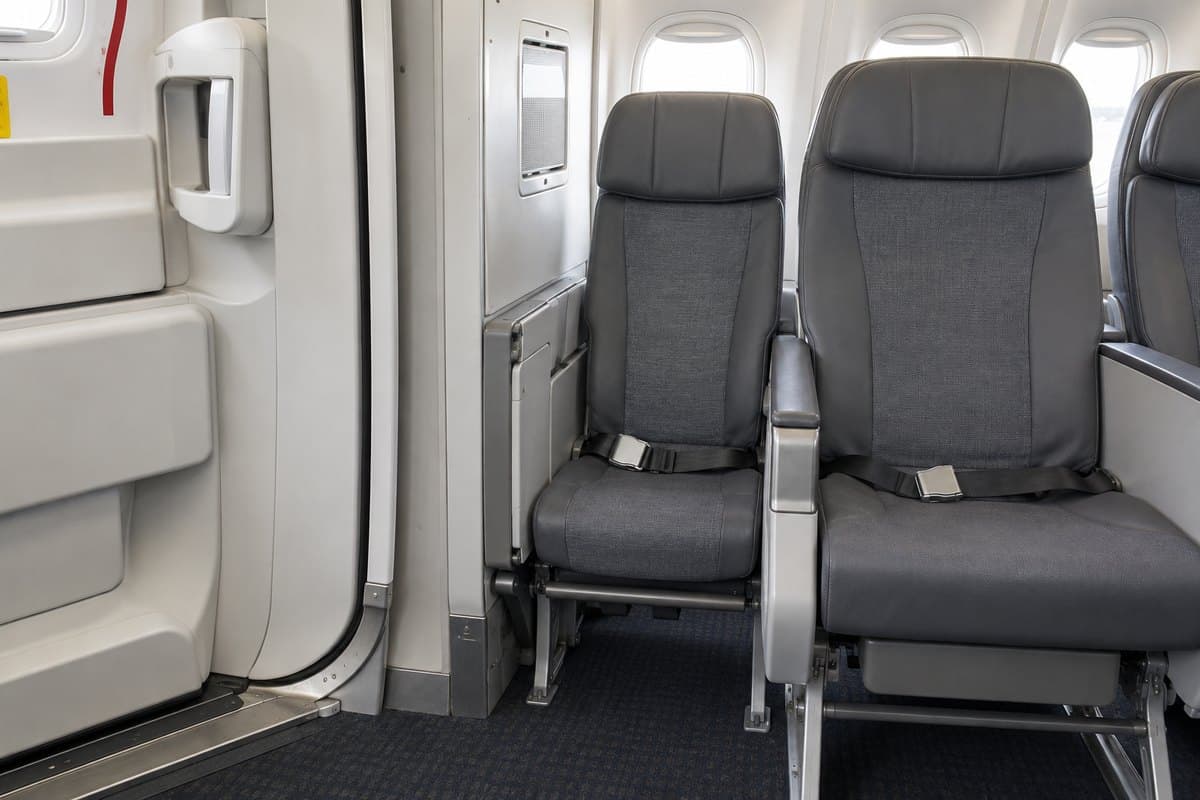
Then came the exception. I thought I had bought extra legroom in an exit row, and I had. I also got a seat narrower than the usual one, with a back that barely reclined, and spent the flight uncomfortable in a way the extra inches did not fix.
Exit rows are not uniform, and the trade is not always pitch for pitch. The door housing can take width from the cushion, the seat in front may not recline, and the tray table sometimes lives in the armrest, which costs you an inch where your hip goes. None of that shows in the fee prompt.
The version of this lesson that survives into 2026 is about evidence rather than avoidance: the seat map is where those differences are usually written down, and it has to be read seat by seat, for your aircraft.
Checking a seat now that SeatGuru is gone
SeatGuru, the seat-map site that launched in 2001 and was bought by Tripadvisor in 2007, closed on October 31, 2025 and now redirects to Tripadvisor. Its last new seat map was made in 2020, so even before the closure it described cabins that had already been refitted.
The replacements are SeatMaps, AeroLOPA, ExpertFlyer, SeatCompare.ai and SeatMaestro. They differ in coverage and in how much they charge for the detailed version, and none of them is authoritative for the aircraft on your booking. The method of using one, checking the cabin layout against the seat you are offered and reading what other passengers reported about that row, is the part that matters. My guide to getting the best seat on a plane walks through it.
Basic economy moved the fees
The cheapest fare is where seat selection stopped being free. American changed its rule for tickets bought on or after May 18, 2026: Basic Economy customers, elite status included, can select a seat only for a fee, and they are not eligible for complimentary upgrades. AAdvantage status still restores free seat selection on Main Cabin fares.
United’s basic economy follows the same shape, with paid selection from $15 a flight. Southwest ended open seating on January 27, 2026, and now sells four bundles: a Basic fare with a standard seat assigned at check-in, Choice with a standard seat picked at booking, Choice Preferred for a seat near the front, and Choice Extra for the extra-legroom seat.
For a family booking four seats, the fee multiplies before it becomes visible. Four passengers at $10 each way on a round trip is $80, which is real money on a fare that was chosen because it was cheap. I wrote about what basic economy does to families in 2017, and the seat fee is the part that arrives last.
Boarding position and the overhead bin
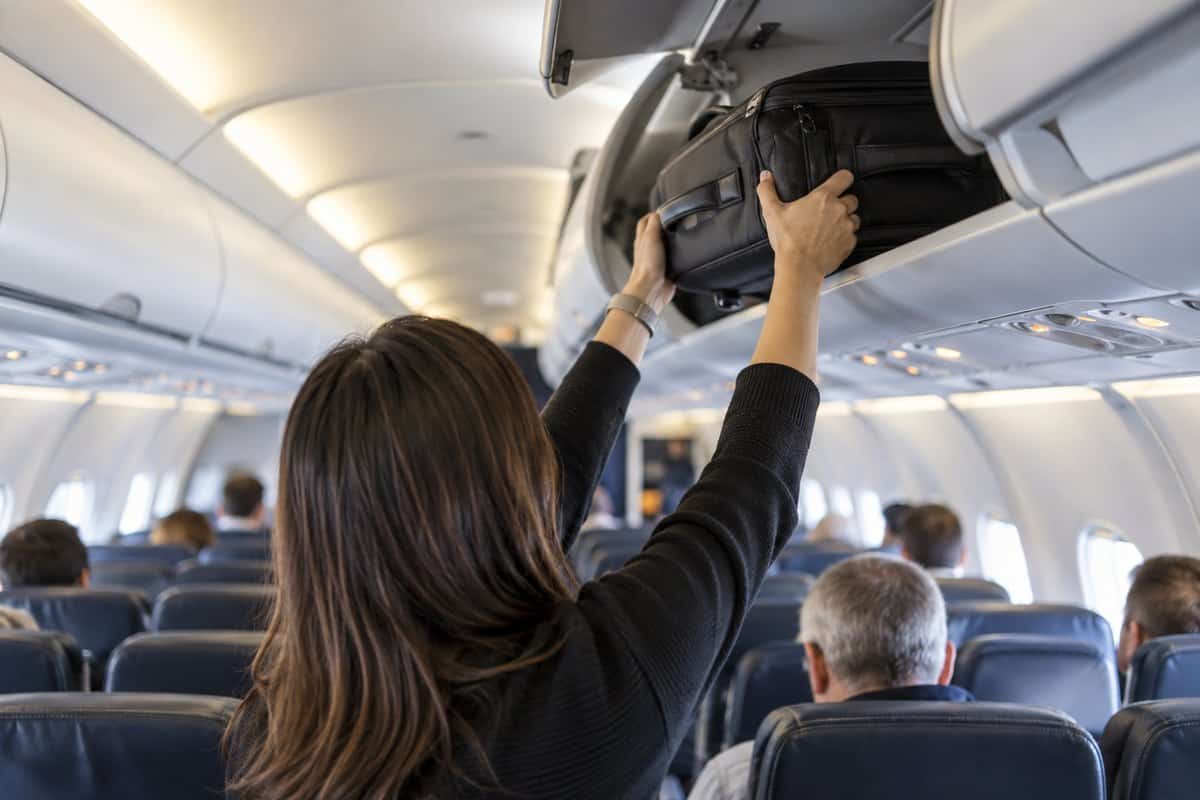
The extra-legroom products often come with an earlier boarding group, and in 2017 that was the part I singled out, because it protects the bin rather than the knees.
If you travel with a carry-on only, boarding late means the bins near your row are full, and the bag goes to the gate check. That adds a wait at the other end, puts the bag in someone else’s hands, and removes the one advantage of packing light in the first place. Early boarding protects the bag, and the legroom comes with it.
On a short flight with a personal item under the seat, that argument disappears, and the fee is buying pitch alone. Which brings the arithmetic back to the front of the queue.
Cost per hour in the air
A $29 fee on a 90-minute flight is $19.33 for every hour you sit in the seat. A $91 buy-up on a five-hour flight is $18.20 an hour. The expensive-seeming fee is the cheaper one per hour, which is the comparison the booking screen never makes.
The calculator below does that sum for your own flight, with the extra inches included so you can see what an inch of pitch costs on this trip.
Fee per hour calculator
Turn any seat fee into a cost per hour in the air. Tap or click to open.
The calculator divides the fee by the flight time you enter, not by the time you spend in the airport. The round trip option doubles the fee for the return seat, because a seat fee is charged per flight. Published bands in the table above come from the sources listed at the end. Without JavaScript, the two worked examples just above give you the same arithmetic.


Leave a Reply