If you are picking up a rental car at an airport, the moment most likely to cost you money is the one at the counter, where a staff member names products that were not in the quote. The rate you booked online is cheap. The next few minutes are the part that is not.
That is the subject of this guide: the paperwork behind one small travel chore. My answer has been the same for years, and it runs to one sentence. The counter is where cheap car rentals stop being cheap, and preparation is what beats it.
I book online, join the loyalty program of the company I am renting from, and walk past the counter to the car in the lot, where the keys are inside and the stall number is in the app. I confirm my own insurance beforehand, and I carry a charging cable, an air-vent mount and a toll transponder of my own. A card’s rental coverage, where a card offers one, is damage cover for the car and not liability, which is how Hertz’s own protection page draws the line. What follows is the rest of the paperwork: what each counter product covers, how the operators charge for it, what a toll bill contains, and a lookup you can open at the counter.
What the counter actually sells
| What you are looking at | What it is | How the operator’s page says it is priced |
|---|---|---|
| Damage waiver (LDW or PDW) | Removes your responsibility for damage on the full version; the partial versions cover damage only up to the amount stated on the rental document, $1,000 in Hertz’s limited version, and the rest stays with you | An additional daily rate for each full or partial rental day (Avis, Hertz) |
| Liability supplement (Hertz LIS, Avis ALI) | Tops up third-party injury and property-damage claims above the state minimum | Per day. Hertz LIS runs to $1 million combined per occurrence, $2 million in California and Florida; Avis ALI runs to a $500,000 combined single limit. |
| Personal accident and personal effects (PAI, PEC or PEP) | Accidental death and medical benefits for people, cover for belongings | Scheduled limits. Avis PAI schedules $175,000 accidental death for the renter and $10,000 medical; PEP covers $1,000 per item up to $3,000 a rental. |
| Toll service (PlatePass, e-Toll) | Pays tolls and bills them to the payment card on file | Budget charges $6.95 per usage day plus the toll, capped at $34.95 a rental. Avis charges $6.95 on each day tolls are incurred, to the same $34.95 per rental period, not to exceed 30 days. |
| Extra drivers and younger drivers | Daily charges keyed to who holds the wheel | Enterprise charges $15.00 a day for an extra driver, $5 in New York, with a spouse or domestic partner at no charge. Hertz charges its Young Renter fee once per rental. |
How cheap car rentals become an expensive bill
The line items that are not in the quote
A booking site quotes the car and the days. Everything else is arranged afterwards: the products at the counter, the names attached to the wheel, the fuel at the end, whatever the roads charge. AutoSlash, the price-tracking service, is direct about the boundary: its FAQ says optional services are not included in its quotes and are added at the rental counter, and that taxes can add upwards of 30 percent to the cost at some airports.
What the contract says you agreed to
Avis puts the rule plainly on its own site: if you do not accept either form of damage waiver, you owe for all loss or damage to the car. Hertz says the same in more words: in most states the renter is responsible for loss or damage resulting from any cause, including collision, rollover, theft, vandalism, fire, flood and hail. Hertz’s own page adds the phrase that matters: regardless of fault.
None of that is hidden. It is in the document you sign, written to be signed quickly, at a counter, with a queue behind you.
What is sold at the counter

Loss damage waiver, and what it replaces
A damage waiver answers the paragraph above, and neither Hertz nor Avis calls it insurance. Hertz writes that by accepting LDW you will be relieved of all financial responsibility for loss or damage to the rental car. Avis writes that LDW is not insurance and not mandatory, and that accepting it means the company assumes responsibility for loss of or damage to the car.
What it replaces is one exposure: the full value of the car you are sitting in. Both companies charge it per full or partial rental day, and Avis states you are charged the rate per day for a full day even if you do not have the car the entire day. That rule applies to its other products too, and it matters on a rental that begins late in the afternoon.
Liability, and the state minimum
Liability is the other half, and the two do not overlap. A waiver on the car does nothing for a claim made against you by someone you injured or whose property you damaged. The rental agreement generally carries a baseline at the level the state requires, and Avis names California and Texas as places where that protection is not included in the rate.
Those limits are low by construction. The California Department of Motor Vehicles publishes the minimum at $30,000 for injury or death to one person, $60,000 for more than one, and $15,000 for property damage. Whether that is adequate is a question for your own insurer. What the counter sells on top is a top-up: Hertz’s Liability Insurance Supplement runs to $1 million combined per occurrence, $2 million in California and Florida, and Avis’s Additional Liability Insurance tops up the state limits to a $500,000 combined single limit.
Personal accident and personal effects
These two cover people and things rather than the car or the claim. Avis schedules personal accident benefits of $175,000 for the renter and $25,000 per passenger, medical expenses to $10,000, and $500 a day for a hospital, capped at thirty days. Hertz schedules $175,000 for the renter and $17,500 per passenger, and requires personal accident and personal effects cover to be taken together.
Personal effects cover protects belongings, and the exclusions are where to look. Hertz caps it at $600 per person and $1,800 per rental and lists what it will not pay for: automobiles and their equipment, currency and documents, guns and fine art, anything lost by mysterious disappearance. Theft must be reported to police.
Prepaid fuel
The fuel option arrives when you are tired. Avis sells three versions. One is a prepaid full tank returned empty, with no credit or refund for fuel left in it. Avis’s fuel-plans page lists another as a short-drive flat fee it calls EZFuel, $17.99, or $18.99 for a rental taken in California, charged on rentals driven fewer than 75 miles; it comes off the bill when the car goes back full and the receipt is presented. The third is the ordinary route of filling the car yourself and returning it full, receipt in hand. Avis states that its prepaid rate is comparable to the current local retail pump price, and that no credit or refund is given for unused fuel.
What the counter actually says, in one lookup
The products above are a list, and the counter is a sentence delivered aloud. Below, each name runs against its line in the paperwork, and the lookup at the end of this section carries the same detail in one place.
| Named at the counter | Named in the operator’s page | Sold as cover for |
|---|---|---|
| The damage waiver | LDW, or PDW where a partial version applies; Hertz also sells a limited version capped at $1,000 | The car itself |
| The liability piece | Liability Insurance Supplement (Hertz), Additional Liability Insurance (Avis) | Claims made against you |
| The accident cover | Personal Accident Insurance (PAI) | Death and medical benefits |
| The luggage cover | Personal Effects Coverage (Hertz) or Insurance (Avis) | Belongings in the car |
| The fuel thing | Fuel Service Option, EZFuel, refueling charge | Fuel at the end |
| The toll thing | PlatePass (Hertz), e-Toll (Avis, Budget) | Tolls on covered roads |
| The extra driver | Additional Driver | Permission for another driver |
| The under-25 charge | Young Renter fee | Nothing; it is a surcharge |
| The roadside call-out | Extended Roadside Assistance (Avis) | The car that will not start |
What is this counter offer?
Pick the one product being pitched and read what it covers, how the operator’s own page says it is priced, and where it stops. Tap or click to open.
No product chosen yet. Pick one of the nine above.
Tolls: the fee inside the fee

How rental toll programs bill
One part of the rental is a view rather than a fact. I think a toll service fee can dwarf the toll itself, and a 2017 Consumer Reports report on rental toll charges put arithmetic on the worst of it, turning a hypothetical $1.50 toll into a charge of more than $20 once the service fee is added. If the toll is avoidable at all, route planning does more than any product at the counter, and this site has a guide to getting around an unfamiliar city without the wrong turns.
The current operator pages are more precise. Budget charges for the tolls plus $6.95 per usage day, to a maximum of $34.95 per rental. Avis charges the same $6.95 for each day on which a toll is incurred, up to a maximum of $34.95 per rental period (not to exceed 30 days), and sells a separate unlimited option at $10.99 to $25.99 a day by checkout location, which has to be chosen at reservation. The mechanism I object to is the daily charge itself, because it lands on every day a toll is used, and Avis bills the toll itself at the toll authority’s maximum non-discounted or cash rate on top of it.
Where a transponder still works
Bringing my own transponder is my move, and it is conditional. Budget’s e-Toll page lists bringing your own device as an alternative to its service and notes it requires advance planning. Consumer Reports adds that the option does not work everywhere, because tolling systems vary by state. I add the rental car to my account and confirm the tolls posted there.
New York is the counter-example worth knowing. Hertz’s PlatePass page explains that most entry points to the city’s Congestion Relief Zone read license plates rather than transponders, and that short-term rentals cannot be added to personal E-ZPass accounts, so a customer cannot use a transponder of their own there. The same page notes those congestion charges are billed up to three weeks or more after return. In that zone, the plate is the account.
The rest of the toll settlement is slow: Budget says fees may take four to eight weeks to reach the card used. A toll charge appearing two months after a trip is not, on its own, an error.
Who is driving, and what that costs
Additional drivers
A second name is a line item at both companies, and the paperwork is the bigger surprise. Enterprise charges $15.00 per day for each additional authorized driver, $5 in New York, and waives it for a spouse or domestic partner who meets the renter’s age and license rules. Hertz charges per day, per person, and adds the driver at the counter. Enterprise requires the additional driver to appear at the counter with the primary renter and a valid license. Hertz requires a valid license and a credit card in the driver’s name, and both people at a location if a driver is added after the rental has started. I decide who drives before I book.
Under-25 fees
Age sits on the rental as a charge of its own, calculated once rather than per head. Hertz rents from 20 in most states, 19 in Alabama and Nebraska, 18 in Michigan and New York. Its Young Renter fee applies once per rental rather than per under-25 renter, varies by location, and is waived for eligible members of certain programs. Being under 25, Hertz states, does not oblige anyone to buy additional insurance.
Pickup without the line
Loyalty programs, and the board
This step is what removes the biggest pain point in my own rentals. Hertz calls its Gold+ program free to join, with member rates and the ability to skip the line at what its own footnote calls select locations. Avis describes Preferred as expedited service and a walk straight to the car at most locations. Both qualify it in small print, and both mean it.
The information you type in once is what the counter would ask for anyway: license, card, address. The payoff is a car on a board with your name, a stall number in the app, and the keys waiting inside.
Photos before you move
Before the car moves I walk around it with the phone and take the same three shots: exterior, interior and the odometer. Damage disputes are argued from records, and a timestamped photograph is a record that depends on nobody’s memory of a scratch.
Airport counter versus the shuttle
The bigger choice sits earlier, at booking. An airport counter usually costs more, and in my view often earns the difference: no shuttle with luggage, later hours, and the ability to walk to the next counter when a booking falls apart. Off-airport is often the cheaper number, so I compare both and let the arrival time decide.
Choosing the car, and the app
Why I stopped taking the smallest car
I do not book the absolute bottom of the range. The reason is not luxury; it is a price comparison I ran once and never forgot. I searched two consecutive classes on the same company’s site for the same week, and the per-day gap between the cheapest car and the next size up was small. Numbers move, so the durable part is the habit: price the smallest car against the one above it and book the size I want. The smallest car is also the one the company will sell soonest, because a rental fleet is a used-car business with a desk in front of it, which is what this site looked at in its review of Hertz’s ex-rental sales.
The app, the stall number, the cable and the mount
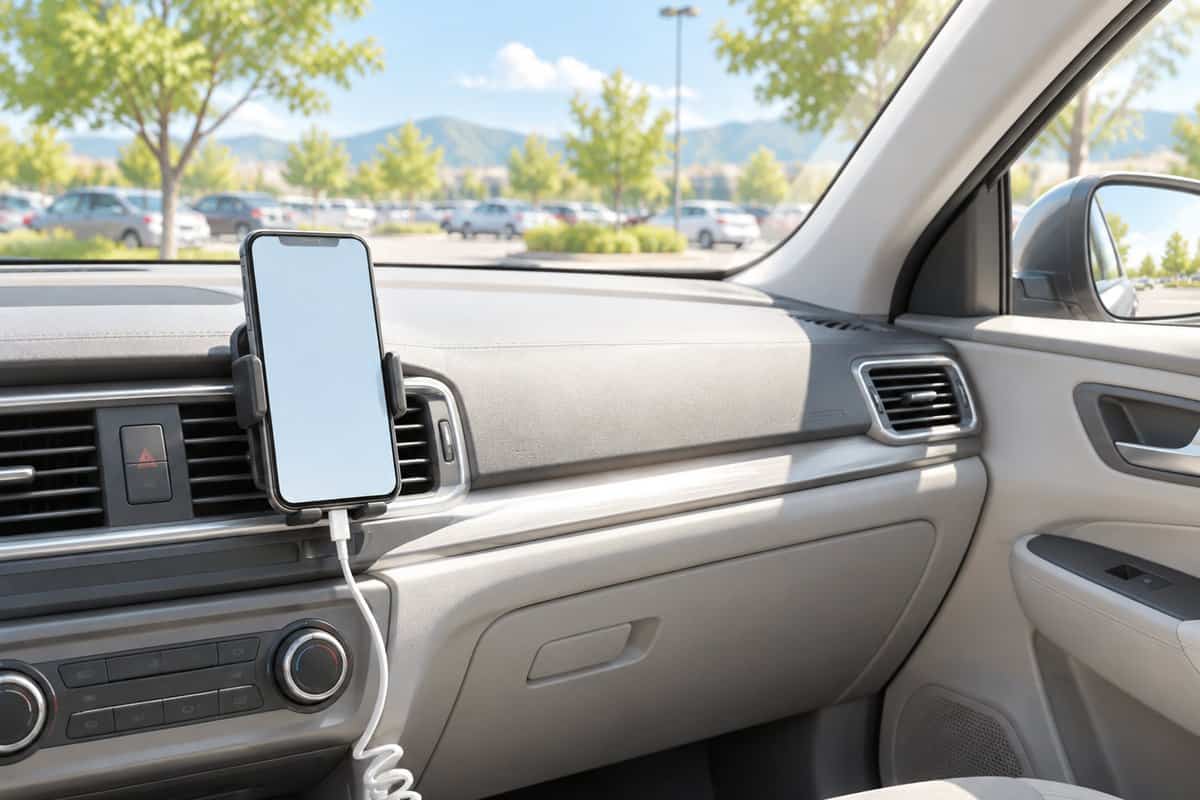
Three things travel with the passport: a charging cable, an air-vent mount that keeps the phone off the windshield, and the toll transponder, useful once the car has been added to my account. I log into the app before the flight rather than after it, so the stall number is on the screen when the wheels are down.
Returning it without a dispute
Fuel, photos, receipt
The return repeats the pickup, which is the point. I photograph the fuel gauge, odometer and car again in the return lane, and everything I brought leaves with me, transponder included. Then I read the receipt in the terminal, where a wrong line is still a conversation rather than a claim.
A charge you did not expect
Two surprises arrive late. A toll charge can appear weeks after return, because Avis and Budget both say their toll billing can land four to eight weeks later. A damage or refueling charge is answered by the photographs taken before the engine turned over.
That is the whole method. Cheap in the search, boring at the counter, quick in the garage, and never a conversation about a scratch at the end.
Frequently asked questions
What does a booking-site rate leave out?
The rate a booking site quotes covers the car and the days; the counter adds products, drivers, tolls and fuel on top of it. Comparing the rate is one step, and reading what the operator adds to it is the other half. Cheap car rentals are won or lost in that second half. My own approach is to settle both at the desk at home, then sit out the pitch at the airport.
Is a damage waiver the same thing as insurance?
No. Hertz and Avis both state on their own pages that a damage waiver is not insurance. Hertz writes that its Loss Damage Waiver relieves you of financial responsibility for loss or damage to the rental car, and Avis writes that its version is not insurance and not mandatory. Neither covers a claim made against you by someone you injured or whose property you damaged; that is the liability question, and the two stay separate.
How much is a rental car toll charge?
Budget’s own page puts a service fee beside the toll itself: the cost of the tolls, plus a service fee of $6.95 per usage day, with a maximum service fee of $34.95 for all rentals. Avis charges the same $6.95 for each day on which a toll is incurred, up to a maximum of $34.95 per rental period (not to exceed 30 days), and sells a flat daily unlimited option at $10.99 to $25.99 by checkout location, chosen at reservation. Budget and Avis both say toll charges can take four to eight weeks to reach the card.
Can I use my own toll transponder in a rental car?
It depends where you are driving, and it does not work everywhere. Budget’s own e-Toll page lists bringing your own device as one of its alternatives and notes it requires advance planning. Consumer Reports notes that the option does not work everywhere, because tolling systems vary by state. New York’s congestion zone is the counter-example: charges there are levied by plate, and Hertz’s own page states that short-term rentals cannot be added to personal E-ZPass accounts.
How much does it cost to add a driver to a rental car?
A daily charge at most companies. Enterprise states $15.00 per day for each additional authorized driver, $5 in New York state, and waives the charge for a spouse or domestic partner meeting the renter’s age and license requirements. Hertz charges per day, per person, and adds the driver at the counter.
What is a young renter fee on a rental car?
It is a charge applied to renters below a set age. Hertz rents from age 20 in most states, 19 in Alabama and Nebraska, 18 in Michigan and New York. Its own page states the Young Renter fee applies once to the rental rather than per under-25 renter, that the amount varies by location, and that eligible members of certain programs may have it waived.
This article is for general information and entertainment, not financial advice.
Sources
All sources below were read in November 2026.
- Hertz, Optional Protection Plans: loss damage waiver, liability supplement, personal accident and personal effects cover, and the limits of credit card rental coverage.
- Hertz, PlatePass: how the toll program works for transponder and plate regions, what happens when it is declined, and the New York congestion pricing note.
- Hertz, Under 25 car rental: minimum ages, the Young Renter fee, and how it is charged. Hertz, Additional Drivers: the per day, per person charge.
- Hertz, Gold+: the free loyalty program and the locations where the counter is skipped. Avis, Avis Preferred: expedited service and going straight to the car at most locations.
- Avis, Loss Damage Waiver, Additional Liability Insurance, Personal Accident Insurance, Personal Effects Insurance, and Fuel Plans and Fuel Service Options: what each product covers, its limits, and how it is charged.
- Avis, Extended Roadside Assistance: lockout service, flat tire help, jump start, fuel delivery, and the Canada tire and windshield terms.
- Avis, e-Toll: the $6.95 fee for each day a toll is incurred, the $34.95 maximum per rental period, and the e-Toll Unlimited daily fee.
- Budget, e-Toll Programs: the $6.95 per usage day fee, the $34.95 maximum, the four-to-eight-week billing lag, and bringing your own device as an alternative.
- Enterprise Rent-A-Car, adding an additional driver: the daily charge, the New York figure, and the spouse or domestic partner exclusion.
- California Department of Motor Vehicles, Insurance Requirements: the state minimum liability limits used in this guide as a worked example.
- Consumer Reports, How Does A $3 Toll Turn Into A $20 Rental Car Charge?, last updated August 10, 2017: the report quoted in the toll section, and the state variation in personal transponder rules.
Price-tracking services and reporting
- AutoSlash, Frequently asked questions: how the coupon search and price tracking work, and the note that counter extras and taxes are added on top of a quote.
Updated November 2026 by Richie with the help of modern digital tools.


My credit card (CSR) also gives me status at one of the big car companies, which means better service and car selection. The deals come and go, but it’s a no brainer if you have a deal like that.
Absolutely. If you have status and get discounts at a particular company, I find that it’s usually the best way to go, though not always. I’d still recommend getting quotes from Autoslash, since it lets you specify which credit cards and discount programs memberships you have, in order to take them into account.
Personally, I have status and discounts with Hertz, and will usually rent from them for short rentals, even if they’re not the cheapest. For longer rentals, though, I might go through an added hassle (such as renting off-airport), since the price difference can be big.
Cheers,
Miguel