The first pizza comes out of the oven with a blistered edge. Someone reaches for basil, someone else asks if the mushrooms are spoken for, and suddenly the kitchen has become the best room in the house. That’s the pizza party worth planning: a little participatory, generously messy, and relaxed enough that the host actually gets a slice.
A build-your-own pizza party sounds effortless until eight people need the same oven. The trick isn’t to buy a special oven or offer a buffet of 27 toppings. It’s to decide what your kitchen can comfortably bake, prepare a compact topping station, and let everyone share the pies as they arrive. King Arthur Baking’s party guide makes an especially useful distinction: pan pizzas are much easier to serve to a crowd from a home oven than a parade of individually stretched rounds.
Here is a plan for that kind of evening, with a small pizza-count planner below. You can make the dough, buy it, or give a store-bought pizza a starring supporting role. What matters is that the food keeps the conversation going instead of trapping you beside the oven.
At a glance: the party plan
| Decision | Simple starting point |
|---|---|
| Oven setup | Use sheet-pan or pan pizzas for a crowd in a home oven; use personal pies if your baking setup can keep up. |
| Toppings | Choose one sauce, one main cheese, a few vegetables, and one or two finishing touches. |
| Guest experience | Let people top in turns, then share slices from every pie rather than wait for an individual pizza. |
| Host’s job | Manage the hot oven, a clear landing place, and the cutting board. |
Start with the oven, not the shopping list
The oven is the bottleneck nobody sees in the pretty party photograph. A single home oven can only accommodate so many pans or stones at once. If every guest shapes a separate pizza and expects dinner at the same time, you’ll be taking orders in your own kitchen. For a bigger group, consider two or three large pan pizzas that can be assembled ahead and cut into squares. King Arthur recommends pan styles for a home-oven crowd because the dough can already be in its pan when guests arrive; it also warns that a stone or steel can lose heat between successive freeform pies. That’s a kitchen-logistics argument, not a rule about which crust tastes best (read its full hosting guide).
Pick one of two honest formats
The communal pan party: Each pan is a canvas with distinct sections. Put tomato and mozzarella on most of it, keep another section simple, and add a few toppings only where people want them. Guests still get a say without everyone queuing at the oven. You can put the first pan in before the party reaches its busiest point, and the next one becomes the evening’s second act. This is the format I’d choose when the kitchen is small and the guest list is not.
The personal-pie workshop: Set out small portions of dough and invite each guest to build a pie. This is charming for a smaller gathering, especially if shaping is part of the entertainment. It requires more counter space, a clear sequence for baking, and an agreement that people will taste one another’s work as it comes out. A pizza oven can change the timing, but it isn’t necessary for a good night. Work backward from the oven you already have rather than from the fantasy oven in an advertisement.
Either way, designate three places: an assembly area, a hot-pizza landing zone, and a serving board. Keep the hot zone away from the tangle of guest hands and topping spoons. Put the cutter and a rack near the landing zone before the first pie goes in. King Arthur suggests a separate slicing station and a cooling rack to help preserve the bottom crust as a pizza rests (source). This modest piece of choreography can make the host feel less like a short-order cook.
If you want to see the format in motion before you commit your evening to it, here is a clear walkthrough of the sheet-pan version from professional chef and baker Brian Lagerstrom.
How much pizza should you plan?
Appetites are not tidy arithmetic. A late lunch, a tray of snacks, and an enthusiastic teenager can all upset a perfect calculation. Use the planner as a conversation starter, not a promise. It assumes a 12-inch pizza cut into six slices, a serving approach also used in Ooni’s pizza-party planning guide. You choose an illustrative slice target per person and whether to add one spare pie. The result is rounded up to whole pizzas. If you bake pan pizzas instead, think in comparable shared portions rather than treating the number as a precise pan conversion.
Pizza-night planner
Choose your own appetite estimate. This is for party planning fun, not a guarantee of what anyone will eat.
Ooni proposes a more generous personal-pie approach for its own style of party: roughly one 250-gram dough ball per guest, with additional dough in reserve (its detailed pizza math). That’s a different setup from passing around communal pan-pizza squares. Don’t silently mix the two systems. Decide whether guests are each making their own dinner or sharing pies, then let your ingredients follow that choice. If you expect little children, a substantial salad, or a dessert, adjust your own slice assumption rather than pretending the planner knows your table.
The dough can be the easy part
Homemade dough is a lovely invitation, not an entrance exam. King Arthur’s “Easiest Pizza You’ll Ever Make” recipe yields up to four 12-inch pizzas and provides a concrete method if you want to bake from scratch. It calls for a rise of about one to two hours, and also describes a refrigerator option after the first rise for a more flexible schedule. Follow the recipe you choose, including its own oven instructions, rather than stitching together temperatures and timings from unrelated crust styles.
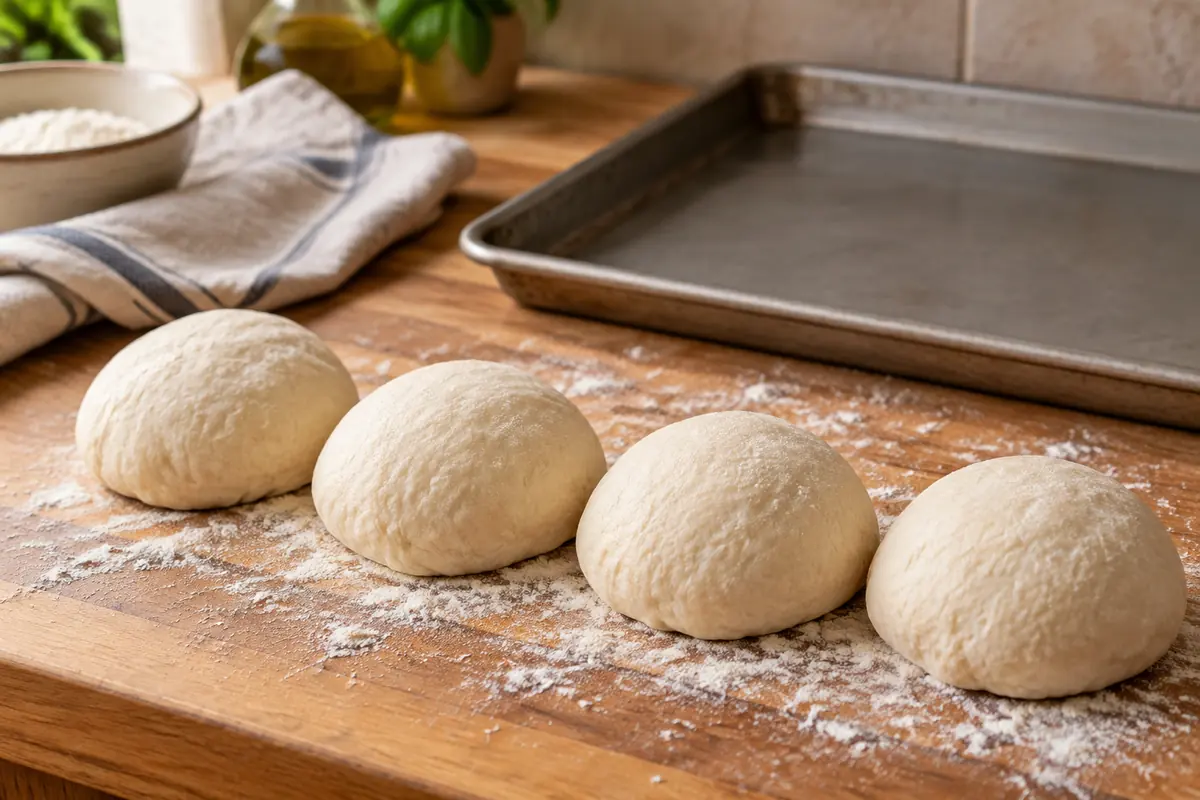
Buying prepared dough is perfectly compatible with a thoughtful party. Portion it ahead if you’re making individual pies and give each portion a covered place to wait. If you’re making pan pizzas, prepare the pans before the doorbell begins its work. The critical luxury is having the flour, pan, and space ready when someone says, “What can I do?” You can answer with a task instead of a frantic search through a cupboard.
Shape for the mood you want
Perfect circles are for geometry lessons. A rough oval is just as welcoming on a board. For individual pies, make one demonstration dough first, then let people take turns on a flour-dusted space. King Arthur’s recipe suggests resting dough briefly when it resists rolling and offers hand-stretching as another option (recipe method). For a beginner-friendly assembly line, its hosting guide also suggests shaping on parchment. Use the parchment instructions and temperature appropriate to your particular recipe and baking equipment.
If someone doesn’t want to handle dough, there is still a job for them: selecting a topping combination, setting the table, or naming the next pie. The party shouldn’t turn participation into homework. It should give people a reason to lean into the kitchen, talk across the counter, and be pleased by something that looks unmistakably theirs.
Build a topping bar with a point of view
A long topping list looks generous on paper and chaotic on the counter. Make one dependable red-sauce lane, then one contrasting lane: perhaps sautéed mushrooms with mozzarella, or roasted peppers with a finishing scatter of basil. Put a plain cheese option in the plan too. It gives cautious eaters a comfortable first slice and lets the adventurous pies be adventurous without making the whole dinner a dare.
For the sauce, a simple tomato base does the work. If you want a separate sauce project, the site’s tomato-paste-to-pizza-sauce guide offers another path. Otherwise choose one sauce you like and put it in a bowl with a spoon. Sauce does not become more impressive because it lives in five different jars. King Arthur’s party guide recommends making cooked sauces in advance, grating cheese, and preparing toppings before the guests arrive (its preparation checklist).
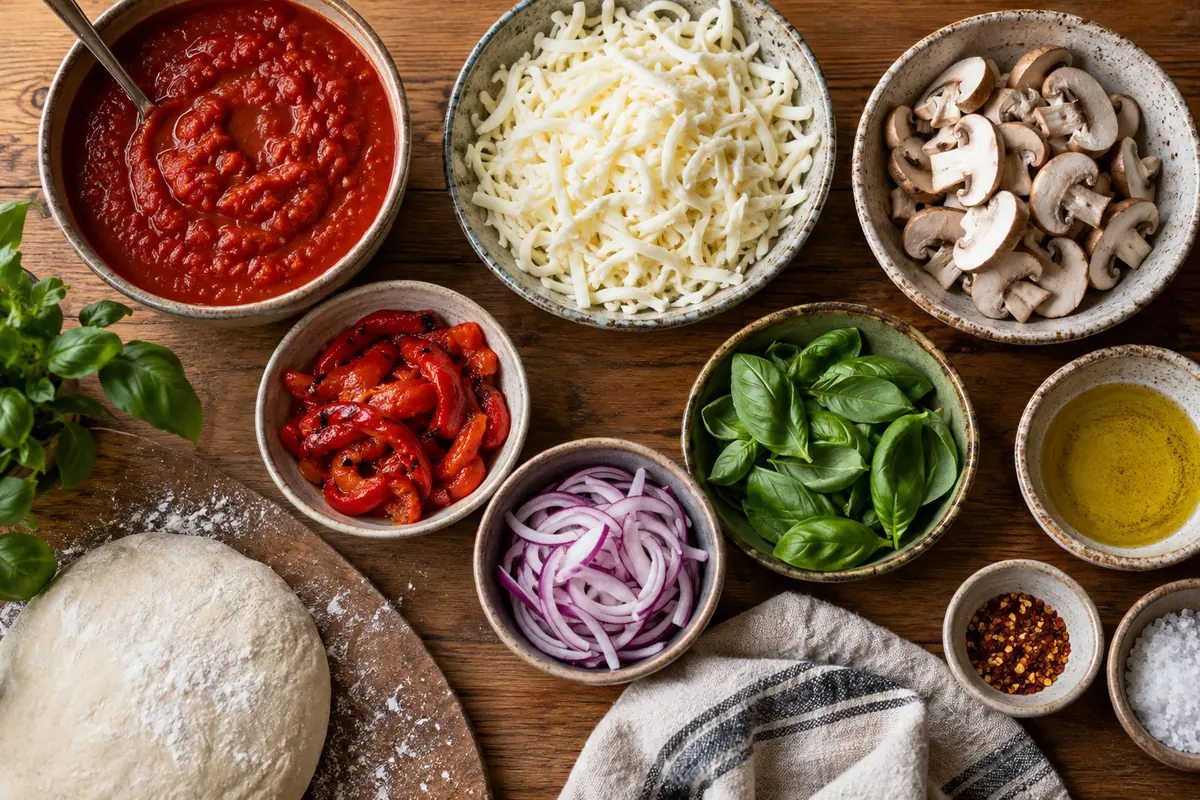
My suggested station has a bowl of sauce, a bowl of mozzarella, prepared mushrooms, sliced peppers, a little onion, and basil for the finish. Put different spoons in the bowls, and leave space for people to assemble without reaching over a hot tray. A second cheese can be fun if it’s already in the kitchen; it needn’t become another errand. Keep any guest’s dietary preferences visible in the setup, perhaps by reserving a clean section of the counter and a clearly identified separate pan. Ask people what they prefer rather than guessing.
Think about water, not just flavor
A mountain of toppings may look splendid before baking and less splendid on a soggy freeform crust. King Arthur recommends preparing nearly all toppings in advance and warns that heavily topped freeform pies can turn soggy; its easy pizza recipe offers sautéed mushrooms, onions, or peppers among the prep options (party advice; recipe). Treat toppings as accents, not structural load-bearing walls. If a guest wants a mountain, suggest making a second, different pie rather than trying to balance everything on one crust.
Give finishing touches their own little home near the serving board. Basil can wait until the pie lands. A drizzle of olive oil, a pinch of chile flakes, or a modest scatter of hard cheese can change a slice without asking the oven to do any more work. This is also a nice place for a small card that says “Finish here,” if you like a party with a little theater. The card is optional; the kitchen’s friendliness is the important design element.
A timeline that leaves room for guests
Here’s a sample sequence, not a mandatory schedule. The day before, choose your dough recipe or purchase your dough, decide on the two or three topping combinations, and clear enough refrigerator and counter space for your plan. Prepare what your chosen recipe allows in advance. King Arthur favors preparing dough, sauce, cheese, and toppings before party time, then bringing refrigerated dough toward room temperature before shaping (party timeline). Your dough package or recipe remains the authority for its own handling.
On the day, set out the bowls, spoons, pan, cutter, rack, and serving board before guests arrive. Preheat according to the dough recipe and the equipment you are using. For example, King Arthur’s easy pizza recipe specifies a 450°F oven and a 15-to-20-minute bake for its own pizzas, and tells readers to transfer baked pies to a cooling rack (recipe instructions). Those numbers are not universal pizza instructions; a different crust and pan can need a different approach.
When people arrive, invite one or two to assemble the first pie while everyone else pours a drink or looks at the topping choices. Put the first pizza in, reset the counter, and let the next pair make the second. Instead of promising that all food will appear at once, make the rhythm part of the evening. A warm slice can go around the room, and the next pizza can bring a new combination to compare. Nobody needs to stand guard over “their” pie while other people wait.
A one-oven run sheet for two pans
- Before guests arrive, prepare both pans according to your chosen recipe. Put bowls and serving gear within reach, but keep the assembly spot clear.
- Invite guests to choose the first pan’s sections. Bake it using that recipe’s directions while someone sketches the second pan’s topping choices.
- Move the finished pan to a safe landing spot and share the first squares. Assemble and bake the second pan while people eat and compare combinations.
- Set the second pan beside the first, let guests revisit favorites, and take your own slice. The pans need not finish at the same time for dinner to feel complete.
This is an order of operations, not a bake-time calculation. Pan size and portions come from the recipe you choose. The planner above is deliberately for six-slice, 12-inch round pizzas; it does not pretend to know how many squares your particular pan will yield. For a pan party, use the run sheet and decide the number of pans from your recipe and the appetites at your table.
Let the drinks and table be simple
A pitcher of water with citrus, plain sparkling water, or whatever else your guests enjoy is enough to make the table feel ready. If you’d rather turn drinks into another little project, the site’s mason-jar cocktail-kit article offers a festive idea for adults. For a mixed group, a make-your-own nonalcoholic spritz with fruit and sparkling water gives everyone a shared ritual. Keep drinks off the dough-shaping surface, even if your counter insists that it can do everything.
The table needs plates, napkins, and a spot for the hot board. It doesn’t need a themed centerpiece that must be moved before dinner. If you have a stack of mismatched small plates, use them; pizza is one of the few dinners that looks perfectly at home on a plate with a different pattern from its neighbor. A green salad or a bowl of fruit can round out the spread, but it is completely reasonable to let pizza be the event.
Small details that make the night feel generous
Write the suggested combinations on a scrap of card, not as orders but as gentle prompts. “Tomato, mozzarella, basil” is a reassuring first round. “Mushroom, pepper, onion” gives the next pan a different personality. If people dream up something better, change the card. I’d rather have that conversation than a perfectly designed label on the sauce bowl.
Leave one untouched portion of cheese and sauce for the last pie. A buffet has a way of making the most appealing ingredients disappear before the final pan. It simply helps the last assembly feel as considered as the first. If a topping runs out, call it a one-night-only special instead of apologizing for it.
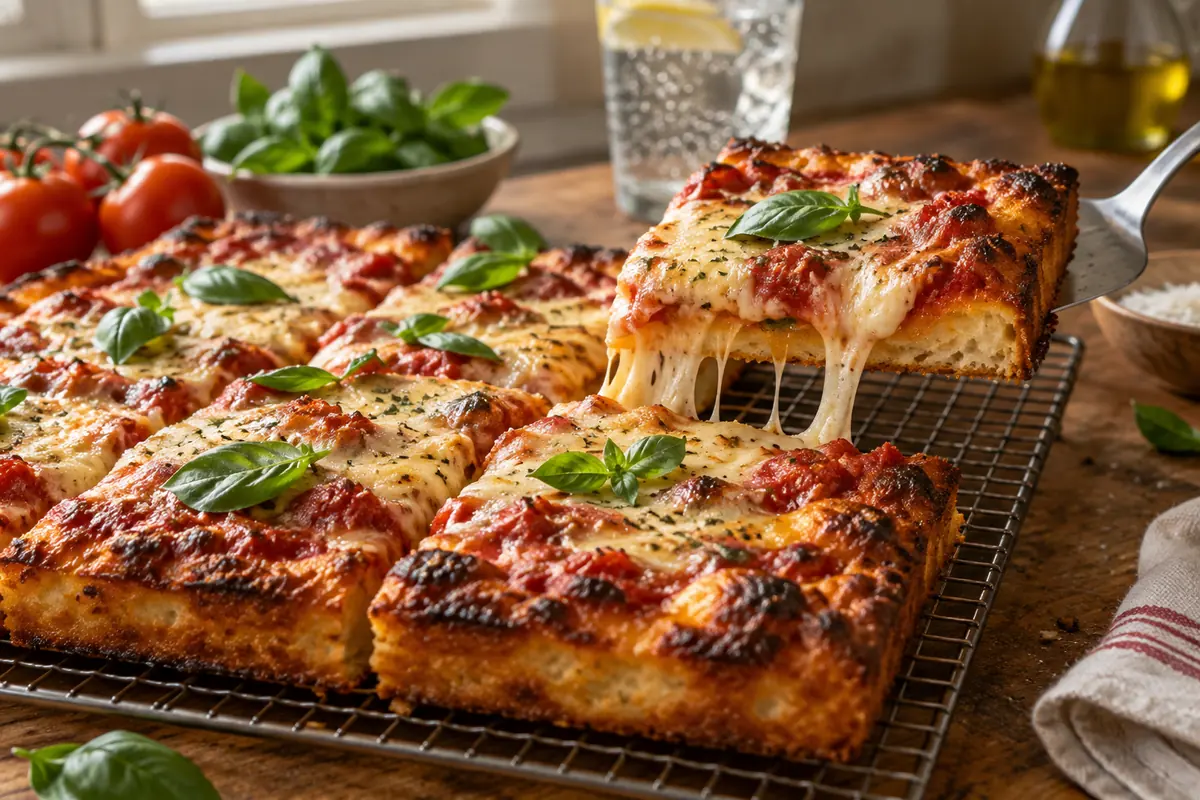
Give the first cooked pizza a short pause on a rack while you clear the landing spot and prepare the next one. King Arthur’s easy-pizza instructions call for transferring each pie to a cooling rack and serving after a brief rest; follow your own recipe’s directions for doneness and handling (source). Then slice and share. The guest who topped it can take the first square if you like, but no one needs to make a speech.
What to do when the plan meets real life
The dough springs back
Stop fighting it. King Arthur’s easy-pizza method suggests letting the dough rest several times if it resists rolling (its shaping instructions). Move to another job for a moment: refill the bowls, wipe the board, or set out the next pan. The dough isn’t being difficult to spite you. If a round becomes an oval, the oven won’t demand an apology.
Every topping ends up on the first pizza
Pause the assembly line and give that pie a second look before it bakes. King Arthur cautions that too many toppings can make a freeform pizza soggy (hosting guide). Divide the toppings over another pie if there is dough left. The second pizza isn’t a consolation prize; it is a new combination for the table to debate. Keep sauce and cheese in modest layers and let the crust be part of dinner too.
Dinner is taking longer than expected
Don’t pretend there is a faster oven hidden behind the fridge. Serve the first pizza in smaller pieces and let everybody taste it. Move any already baked pie to a rack while you work on the next one. If you had chosen the personal-pie route for a large gathering, consider switching the remaining dough into a communal pan format only if it suits the dough and pans you have. Next time, start with the format your oven handles best. This evening, let the staggered arrival of pies be part of the fun.
And if the dough plan collapses entirely, a store-bought pizza can still be an excellent base for a toppings night. The site’s store-bought pizza ideas are a handy companion to that backup. No guest has ever been improved by a host who refuses an easy rescue because the original plan sounded grander.
Frequently asked questions
Can I have a pizza party without a pizza oven?
Yes. Choose pan or sheet-pan pizzas for a larger group, especially when using one home oven. King Arthur recommends pan styles because the dough can already be in the pans before people arrive (source). Bake with the timing and temperature specified by the recipe you choose.
How many pizzas do I need for eight guests?
With the planner’s illustrative assumption of three slices per person and six slices per 12-inch pie, eight guests imply four pizzas, or five if you add a spare. That is an estimate, not a promise about appetites. Ooni also describes cutting a 12-inch pizza into six slices in its planning guide; choose a different appetite estimate if your menu calls for one.
How many toppings should I put out?
There is no required number. My starting menu is one sauce, a main cheese, three prepared vegetables, and one or two finishes. It makes a friendly station without turning the counter into a crowded aisle. Keep the choices that suit your guests and skip anything that would create more work than pleasure. King Arthur also advises a selective approach and preparing toppings before the party (source).
Can I prepare dough the day before?
King Arthur’s easy pizza recipe explains how to refrigerate its dough after an initial rise and work with it the next day. Check the instructions for whichever dough you use. Its party guide also suggests making dough in advance so that the gathering doesn’t revolve around last-minute mixing.
The best part of a pizza party isn’t a perfect circle. It’s the moment the next pie arrives and everybody leans in to see what someone else made.
When the last pan comes out, put the cutter down and take your own slice while it’s warm. The basil can wait a second. Your guests came for pizza, yes, but they also came to spend an evening with you.
Researched and written by The Miser’s Desk with the help of modern digital tools. Images: AI-generated editorial illustrations.
This article is for general information and entertainment, not financial advice.

Leave a Reply